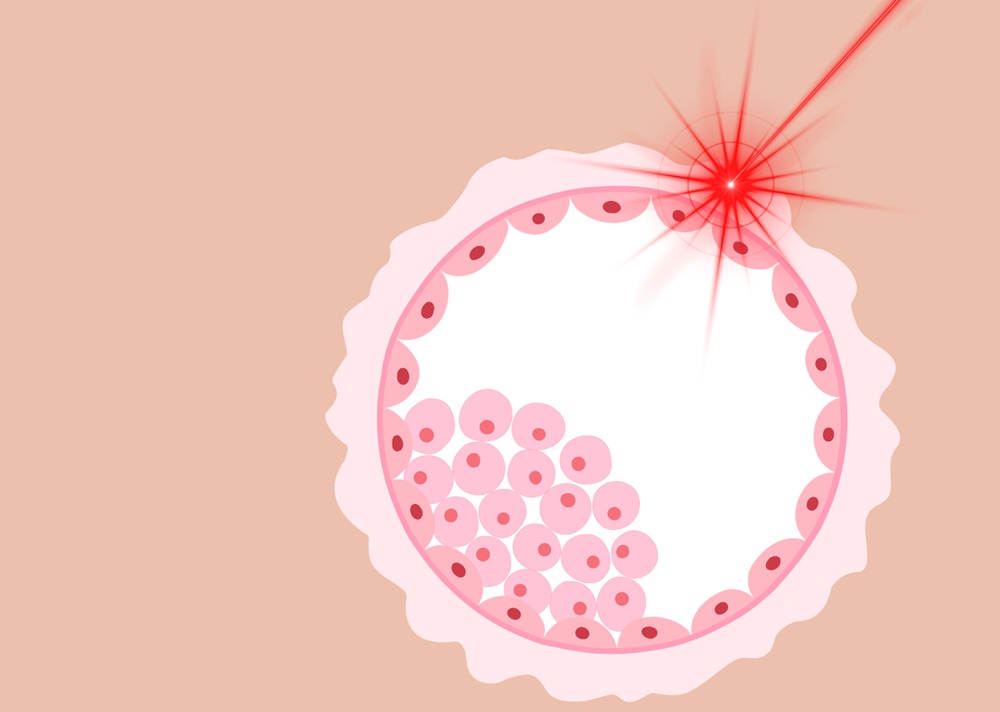
What is Laser-Assisted Hatching (LAH) in IVF?

Laser-Assisted Hatching (LAH) is a specialized procedure in IVF. This procedure aims to improve implantation rates.

During IVF, embryologists use Laser-Assisted Hatching (LAH) to create a precise opening in the zona pellucida (ZP), the embryo’s outer shell, using a laser. This technique helps the embryo “hatch” and attach to the uterine lining for implantation. Historically, practitioners employed chemical methods (acidified Tyrode solution), mechanical methods (microneedles), and laser techniques, but today they favor laser-assisted hatching for its superior precision and safety.

Why is Laser Assisted Hatching (LAH) Performed in IVF?

Hatching is a natural process where the embryo escapes the zona pellucida to implant in the uterine lining. In some cases, embryos have difficulty hatching due to:

  • A thickened or hardened zona pellucida (common in frozen embryos).
  • Advanced maternal age (>35 years).
  • Poor embryo quality or slow growth.
  • Recurrent implantation failure in previous IVF cycles.

LAH may theoretically improve the chances of implantation by aiding the hatching process, particularly in these cases.

Benefits and Indications for Laser Assisted Hatching (LAH) in IVF

  1. Patients with Advanced Maternal Age: Aging affects the zona pellucida’s elasticity and thickness. LAH may improve implantation rates for these patients.
  2. Recurrent Implantation Failure: For patients with two or more failed IVF attempts, LAH can address potential barriers to successful hatching.
  3. Frozen-Thawed Embryos: The freezing process can harden the zona pellucida. LAH may help these embryos implant successfully.
  4. Specific Diagnoses: Conditions like endometriosis or unexplained infertility may benefit from LAH when other options fail.

Risks and Controversies

While LAH has potential benefits, it is not without risks:

  1. Embryo Damage: Misapplied laser energy or improper handling during the procedure can harm the embryo.
  2. Monozygotic Twinning (MZT): Some studies link LAH to an increased risk of identical twins, potentially due to artificial splitting of the embryo.
  3. Mixed Results in Success Rates:
    • High-quality studies show no significant improvement in live birth rates with LAH in unselected populations.
    • Some subsets, like women with day-6 blastocysts, may experience marginal benefits.
  4. Unnecessary Use: Evidence does not support routinely using LAH for patients with good prognoses or younger age.

How is Laser Assisted Hatching (LAH) Performed in IVF?

  1. Timing: LAH is typically performed on the day of embryo transfer (days 3, 5, or 6 post-fertilization).
  2. Procedure: A precise laser creates a small opening in the zona pellucida, either by thinning or creating a full-thickness breach.
  3. Safety Measures: Embryologists use advanced imaging microscopes and lasers to ensure accuracy and avoid damage to the embryo’s cells.

Effectiveness of LAH in Fresh Embryo Transfers

Studies have yielded mixed results:

  • No Universal Benefit: High-quality randomized controlled trials (RCTs) found no significant difference in live birth rates between LAH and control groups in fresh transfers.
  • Patient Subsets:
    • Patients with poor prognosis (e.g., advanced age or recurrent implantation failure) showed inconsistent outcomes.
    • A few studies suggest improved outcomes for day-6 blastocysts but not day-5 transfers.

Effectiveness of LAH in Frozen Embryo Transfers (FET)

  • General Population: Meta-analyses show no consistent improvement in live birth rates with LAH in FET cycles.
  • Subsets: Limited evidence suggests possible benefits for specific subsets, such as poor-quality embryos, though findings are not universally applicable.

Does Laser Assisted Hatching (LAH) in IVF Increase Monozygotic Twinning (MZT)?

  • Mixed Evidence: Retrospective studies and meta-analyses offer conflicting results regarding the link between LAH and MZT. Some show increased risk, particularly with cleavage-stage embryos, while others show no significant difference.
  • Contributing Factors: Variations in technique, embryo stage, and study design complicate conclusions.

What are the Current Recommendations for Laser Assisted Hatching in IVF?

  1. Routine Use: LAH is not recommended for all patients undergoing IVF.
  2. Patient Selection:
    • Consider for patients with recurrent implantation failure or advanced age.
    • Avoid routine use in young patients with good prognosis.
  3. Technique Standardization: Clinics should adhere to standardized protocols to minimize risks and inconsistencies.
  4. Informed Consent: Clinicians must fully inform patients about the potential risks, benefits, and uncertainties associated with LAH.
Call Now Button