Preparing for a Semen Analysis Test
Proper preparation can significantly improve the accuracy of semen analysis results. Here are essential tips:
- Abstinence Period: Abstain from ejaculation for 2 to 7 days before the test. Abstaining for less than 2 days may result in a lower sperm count, while longer abstinence may negatively impact sperm motility.
- Avoiding Lubricants and Chemicals: Refrain from using lubricants, creams, or oils during sample collection, as these substances may interfere with test results.
- Collecting the Sample in a Sterile Container: Use only the sterile, non-toxic container provided by the clinic or lab, as contaminants can compromise the test results.
- Timely Delivery: Deliver the sample to the laboratory within 30 minutes of collection, ideally at a stable temperature close to body temperature (20-37°C) to preserve sperm quality.
How to Collect a Semen Sample for Semen Analysis Test
The most common method for semen collection is through masturbation into a sterile container. However, clinics and laboratories can offer alternatives for men with performance anxiety, erectile dysfunction, or other concerns about collecting a sample in the clinic setting. Discuss this with your doctor for some practical options such as:
- Medications for helping with anxiety or erectile dysfunction
- Home Collection: For men who feel more comfortable collecting the sample at home, many clinics allow home sample collection using a sterile container. The sample should be transported to the lab promptly, ideally within 30 minutes of collection, and kept at body temperature.
- Special Condoms: Clinics may provide special, non-spermicidal condoms for semen collection during intercourse. These condoms are designed for semen analysis and avoid the spermicidal agents or lubricants that may be present in commercial condoms.
- Electroejaculation: Electroejaculation (EEJ) is a medical procedure designed to help men with certain medical conditions, such as spinal cord injuries or severe erectile dysfunction, produce a semen sample. This technique is particularly valuable for those who cannot ejaculate through traditional methods like masturbation. Electroejaculation is frequently used in fertility clinics and specialized urology centers, especially for men who wish to pursue parenthood despite their physical challenges.
If anxiety, medical conditions, or other barriers prevent successful collection, discussing alternative methods and support options with a healthcare provider can make the process easier.
Overcoming Common Challenges During Semen Collection
Men frequently experience certain challenges with sample collection. Here are common issues and strategies to manage them:
- Performance Anxiety: Anxiety about the test can impact one’s ability to produce a sample. If this is a concern, discuss the option of home collection with the clinic to alleviate stress. Deep breathing, mindfulness, and relaxation techniques can also help reduce anxiety.
- Erectile Dysfunction (ED): If ED makes sample collection difficult, talk to your healthcare provider about options. They may recommend medicines or alternative methods to help.
- Spillage or Incomplete Collection: If any portion of the sample is lost or spilled, inform the lab, as it can impact the results. In such cases, additional samples may be required for an accurate analysis.
Clinics and laboratories are accustomed to these concerns and can often offer additional support, privacy, and instructions to help with sample collection.
Understanding the Semen Analysis Process
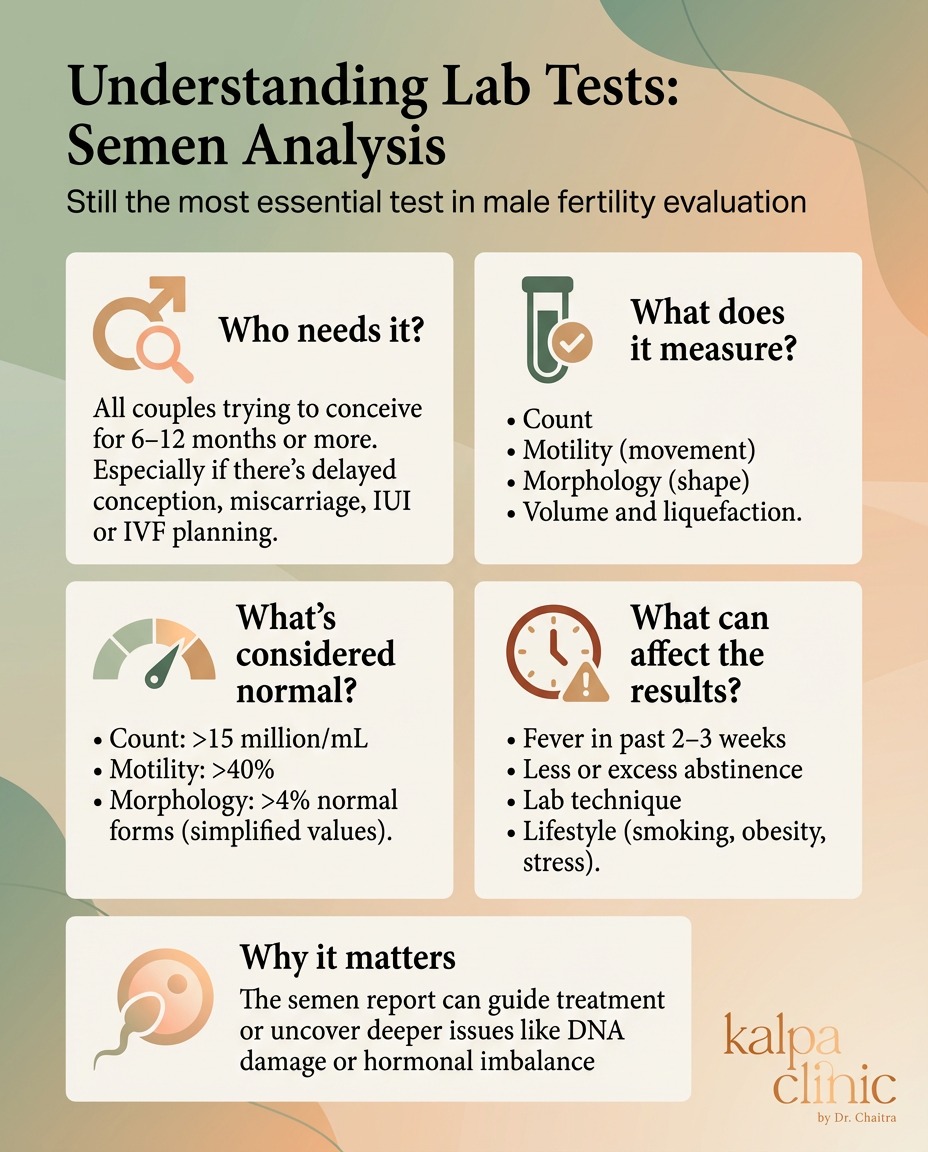
A trained laboratory technician performs semen analysis by allowing the sample to liquefy and then analyzing it with specialized equipment. Here’s what they examine:
- Sperm Count: The number of sperm per milliliter of semen.
- Motility: The percentage of actively moving sperm.
- Morphology: The percentage of sperm with normal shapes.
- Other Factors: The presence of debris, bacteria, and white blood cells, which may indicate infection or inflammation. Some labs may also perform a viability test, measuring the percentage of living sperm.
Modern labs use automated analyzers to increase precision, speed, and accuracy. Automated systems, such as SQA analyzers, help minimize errors and ensure reliable results for patients.
Normal Semen Analysis Results
Typical semen analysis values for a fertile male include:
- Sperm Count: Greater than 15 million sperm per milliliter.
- Motility: At least 40% of sperm should be motile.
- Morphology: 4% or more of sperm should have a normal structure.
Results below these levels may indicate potential fertility challenges, though it’s essential to interpret them with a healthcare provider who can recommend next steps or additional testing.
Factors Affecting Semen Analysis Accuracy
Semen analysis results depend on various factors. Here are critical points to ensure accurate outcomes:
- Consistent Abstinence: The optimal abstinence period is 3-5 days. Longer or shorter intervals can skew results.
- Sample Completeness: Any spillage or incomplete collection should be reported to the clinic to avoid inaccurate results.
- Lab Quality: Choose a laboratory that uses standardized procedures, automated analyzers, and polarized light microscopes to ensure accuracy.
Advanced Testing Options for Sperm Health
If the initial semen analysis indicates fertility issues or unexplained infertility, a specialist may recommend additional tests, such as:
- DNA Fragmentation Index (DFI): Evaluates the integrity of sperm DNA.
- Oxidative Stress Tests: Measures levels of oxidative damage, which can affect sperm viability.
These tests provide deeper insights into sperm health and can guide further fertility treatments or lifestyle adjustments.
When choosing a laboratory for semen analysis, it’s essential to consider the benefits of opting for a fertility-focused laboratory with automated analysis systems. These advanced laboratories, often associated with fertility clinics, provide several advantages in terms of accuracy, consistency, and specialized care. Here’s a closer look at why selecting a fertility-focused lab with automated analysis is beneficial:
Advantages of Automated Semen Analysis Test Over Manual Analysis
1. Enhanced Accuracy and Consistency
- Automated semen analysis systems, like SQA (Sperm Quality Analyzer), use precise algorithms to analyze sperm count, motility, and morphology. This reduces human error and variability, resulting in consistent and reliable results.
- Manual semen analysis involves a technician counting and assessing a small sample of sperm cells under a microscope. Human error, fatigue, or subjective interpretation can influence these results, especially in laboratories with less standardized procedures.
2. Faster Turnaround Time
- Automated systems significantly reduce the time needed to complete a semen analysis, often providing results within 3 to 5 minutes. Manual testing can take over 30 minutes, especially in high-traffic labs, which may lead to delays.
- Rapid results are advantageous for patients who require timely information to make fertility-related decisions, particularly for those undergoing treatment cycles.
3. Detailed and Comprehensive Reports
- Automated analyzers provide detailed, multi-faceted reports, often including advanced metrics such as progressive motility (the percentage of sperm moving forward) and non-progressive motility. These metrics are critical for fertility evaluation and are challenging to assess consistently in manual analysis.
- Some automated systems also assess sperm viability and other important markers, offering a more holistic view of sperm health.
4. Reduced Inter-Observer Variability
- In manual analysis, different technicians may interpret results slightly differently. Automated systems eliminate inter-observer variability by using standardized criteria and digital image processing for sperm analysis.
- Consistency in reporting is especially valuable when tracking fertility progress over time or when comparing results across different tests.
Selecting the Right Laboratory for Semen Analysis Test
1. Specialized Training and Expertise
- Laboratories within fertility clinics are staffed by technicians and andrologists who specialize in reproductive health. Their extensive experience with fertility cases ensures a high level of precision and reliability in semen analysis.
- Staff in fertility-focused labs undergo rigorous training to handle complex semen analyses, and they are often more adept at spotting subtle issues that can impact fertility, such as slight abnormalities in morphology or motility patterns.
2. Access to Advanced Equipment and Testing Methods
- Fertility clinics often invest in high-end, specialized equipment like SQA or CASA (Computer-Assisted Sperm Analysis) systems and high-resolution microscopes, which are typically unavailable in general laboratories.
- These advanced tools allow for detailed assessments that go beyond basic metrics, providing insight into sperm DNA integrity, oxidative stress, and more—information that can be critical for those pursuing assisted reproductive technologies (ART) like IVF or ICSI.
3. Adherence to Fertility-Specific Protocols and Standards
- Fertility-focused laboratories follow standardized protocols from global health organizations like the World Health Organization (WHO) and the American Society for Reproductive Medicine (ASRM). These protocols are designed to yield the most relevant results for fertility assessment.
- General laboratories may lack specific protocols for fertility testing, which can lead to variability in sample handling, analysis methods, and reporting standards, potentially compromising the reliability of results.
4. Integration with Fertility Treatment Planning
- Laboratories attached to fertility clinics work closely with reproductive endocrinologists, making it easier to coordinate results and follow-up consultations. This integrated approach streamlines fertility treatment planning and ensures that results are quickly accessible to fertility specialists.
- For patients undergoing ART, such as IVF or ICSI, seamless communication between the lab and fertility team ensures rapid decision-making, improving treatment outcomes and minimizing delays.
5. Personalized Guidance and Follow-Up
- Fertility-focused laboratories offer a higher level of patient support, providing personalized guidance on interpreting test results and recommending follow-up tests if needed.
- General laboratories may lack the expertise to offer fertility-specific advice, leaving patients without the clarity they need for the next steps in their fertility journey.
Can Semen Analysis Be Done at Home?
Yes, home-based semen analysis kits, such as the FDA-approved Yo Sperm Test, allow men to assess sperm count and motility using a smartphone-compatible device. While these tests offer an initial look at fertility status, they lack the comprehensive analysis available in a laboratory setting. For full evaluation, a lab test remains the gold standard.
Cost of Semen Analysis in Bangalore
The cost of semen analysis in Bangalore ranges from INR 350 to INR 2,800. Tests conducted in fertility clinics or IVF centers using automated analyzers tend to be more accurate and may cost more, averaging INR 1,500 to INR 2,500.
Semen Analysis Test at Kalpa Clinic
If you’re interested in semen analysis or need assistance with fertility testing, Kalpa Clinic provides a comprehensive, patient-centered approach. Our clinic offers a clean, hygienic, and private environment for sample collection, ensuring comfort and privacy during your visit. Post-collection, we have washing and cleaning facilities available for your convenience. All semen analyses are conducted by appointment only, with a skilled andrology specialist on hand to guide you through the process. Using the advanced SQA automated analyzer, we provide precise, reliable results, available on the same day for your peace of mind. You are also provided with a video of the sperms to view count and motility for your records. Charges at the clinic are Rs. 2000 per test. To schedule an appointment with our andrology specialist, please call or message us at 06360834852. We’re here to support you every step of the way on your fertility journey.