
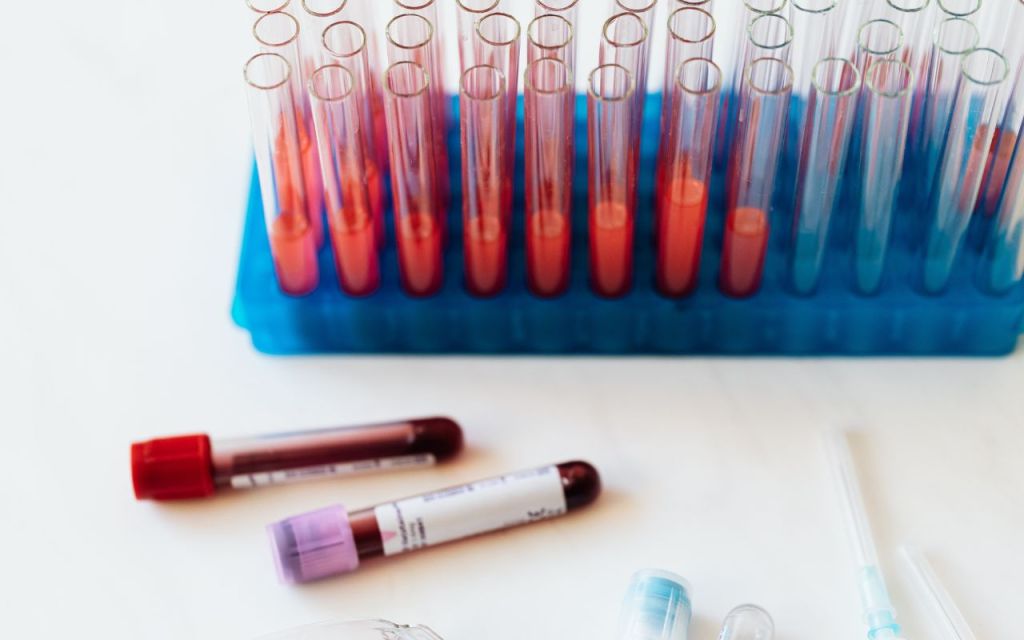
You have just received a blood test report. There is a value on it labelled AMH, and it is either flagged in red, described as ‘low’, or accompanied by a reference range that you are not quite sure how to interpret. You searched online and now feel more worried than before.
This is an extremely common experience. The AMH test is one of the most frequently ordered fertility investigations, and it is also one of the most frequently misunderstood — both by patients and, unfortunately, sometimes by the doctors who order it.
This article explains what AMH actually measures, what your results mean, and — most importantly — what they do not mean. Because the truth about AMH is far more nuanced than most reports suggest.
What Is AMH and What Does It Measure?
AMH stands for Anti-Müllerian Hormone. It is a protein produced by small follicles in the ovaries — the tiny sacs that each contain an immature egg. The more small follicles you have, the more AMH your ovaries produce.
This is why AMH is used as a marker of ovarian reserve — a measure of how many eggs you have remaining. A higher AMH level generally indicates a larger pool of eggs. A lower AMH suggests a smaller pool.
Crucially, AMH tells us about quantity, not quality. An AMH result tells your doctor roughly how many eggs you have, but it says nothing about whether those eggs are healthy or chromosomally normal. Egg quality is more closely related to age than to AMH levels.
AMH Reference Ranges by Age
The following are general reference ranges used clinically. Individual labs may have slightly different thresholds, so always interpret your result in context with your doctor.
| Age Group | AMH Level (pmol/L) | Clinical Interpretation |
| Any age | < 5.4 | Very low reserve — specialist advice needed |
| Under 35 | 14.3 – 48.5 | Normal / good reserve |
| 35–37 | 10.0 – 40.0 | Normal for age |
| 38–40 | 6.8 – 28.0 | Mildly reduced |
| 41–43 | 3.5 – 21.0 | Reduced |
| Over 43 | < 3.5 | Low — time-sensitive |
Important: These are guidelines, not verdicts. A single AMH value should never be used alone to make treatment decisions.
What Does a Low AMH Mean — and Can You Still Get Pregnant?
This is the question patients ask most urgently, and the honest answer is: yes, many women with low AMH do get pregnant.
A low AMH means you have fewer eggs in your ovarian reserve than average for your age. It means that stimulating the ovaries in an IVF cycle may produce fewer eggs than usual. It does not mean:
- That you cannot ovulate naturally
- That your remaining eggs are of poor quality
- That you cannot conceive without medical intervention
- That you need IVF immediately
Women with low AMH who are still ovulating — even infrequently — can conceive naturally or with ovulation support. The critical issue with low AMH is time: if your ovarian reserve is declining, it makes sense to seek advice sooner rather than later, so that your options remain open.
At Kalpa Clinic, we never use an AMH result in isolation to recommend IVF. We look at the full picture: your age, your cycle regularity, your partner’s sperm parameters, your antral follicle count on ultrasound, and your personal preferences and timeline. A low AMH is a data point — not a diagnosis and not a death sentence for your fertility.
What Does a High AMH Mean?
On the other end of the spectrum, a very high AMH can also be a cause for clinical attention. High AMH is frequently associated with Polycystic Ovary Syndrome (PCOS), where the ovaries contain many small follicles — and therefore produce more AMH than average.
In the context of IVF, a very high AMH level indicates a risk of Ovarian Hyperstimulation Syndrome (OHSS) — a condition where the ovaries overrespond to stimulation medication, which can be uncomfortable and occasionally serious. A fertility specialist will use your AMH to calibrate your stimulation protocol carefully if IVF is ultimately required.
If your AMH is high and you have been diagnosed with PCOS, the first conversation is not about IVF — it is about understanding your ovulation pattern and exploring the gentlest path to conception.
How Kalpa Clinic Uses AMH to Guide — Not Dictate — Your Care
One of the most important principles at Kalpa Clinic is that test results inform decisions — they do not make them. Dr. Chaitra Nayak has seen patients referred for immediate IVF on the basis of a low AMH result, when in fact their full evaluation showed they were still ovulating and had every chance of conceiving with far less intervention.
At your consultation, AMH is one part of a complete fertility assessment that includes:
- A detailed menstrual and medical history
- An antral follicle count (AFC) by ultrasound — a physical count of your follicles
- Hormone profile: FSH, LH, oestradiol, prolactin, thyroid function
- Evaluation of the uterus and fallopian tubes where indicated
- Assessment of your partner’s semen analysis
Together, this information gives a real picture of your fertility — not a judgement based on a single number.
When Should You Get an AMH Test?
The AMH test is most useful in specific situations:
- You are planning to start a family in the next few years and want to understand your ovarian reserve
- You have been trying to conceive for 6–12 months without success
- You are over 35 and want to assess your fertility proactively
- You are considering egg freezing and want to know your likely egg yield
- You have PCOS and want to understand your hormonal picture more completely
- You have had previous ovarian surgery, chemotherapy, or a family history of early menopause
What the AMH test is not: a routine fertility check for women with no concerns, or a test that should lead directly to treatment without further evaluation.
A Word on Anxiety and AMH Results
If your AMH came back low, we understand that the feeling can be genuinely frightening. It can feel like a timer has started, or like a door has closed.
Please know that one result, read in isolation, is not the full story. At Kalpa Clinic, our first priority is to help you understand what your results actually mean for you — specifically, not generically. We will not use your anxiety to rush you into a decision. We will take the time to sit with you, answer every question, and map out a path that is evidence-based and right for your situation.
Concerned about your AMH results and unsure what they mean for your fertility? Book a consultation with Dr. Chaitra Nayak at Kalpa Clinic, Bangalore. She will review your complete picture — not just a single number — and help you understand your options clearly and calmly. WhatsApp or call us at +91 94838 85932, or visit us in J.P. Nagar, Bangalore.
Kalpa Clinic | kalpaclinic.com | drchaitra@kalpaclinic.com | +91 94838 85932




Leave a reply