
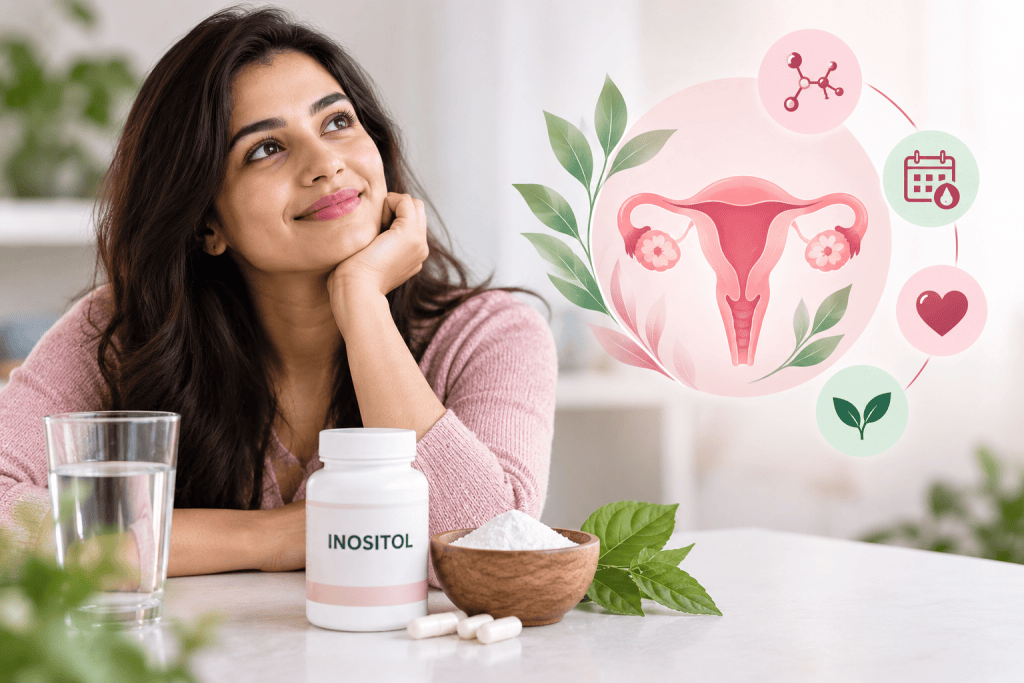
If you have PCOS, now renamed PMOS (polyendocrine metabolic ovarian syndrome), you have probably come across inositol supplements promoted as a natural fix for irregular periods and fertility. Inositol is popular, widely available, and generally safe, which makes it appealing. But does it truly help you conceive? Here is an honest, evidence-based look, including where the science is genuinely uncertain.
What is inositol?
Inositol is a naturally occurring compound involved in how the body responds to insulin. The two forms studied most are myo-inositol and D-chiro-inositol. Because insulin resistance is central to PCOS/PMOS, the idea is that improving insulin signalling might help restore ovulation and improve metabolic health.
What the evidence shows, honestly
The research is a mixed picture, and it is important to be honest about that. Several randomised controlled trials and meta-analyses suggest myo-inositol may improve some metabolic measures, such as insulin sensitivity, and may support ovulation in some women with PCOS/PMOS. However, the influential 2023 international evidence-based PCOS guideline concluded that inositol should not be recommended as a stand-alone fertility treatment, because the evidence is inconsistent and not strong enough. Trials comparing inositol with metformin have generally found no clear difference in pregnancy rates, and data on egg and embryo quality remain uncertain. In short, inositol may help metabolic markers and is low-risk, but it is not a proven fertility cure.
Pros and cons
Potential benefits:
- May improve insulin sensitivity and some metabolic markers
- May support more regular cycles in some women
- Generally well tolerated with few side effects
- Inexpensive and easy to take
Limitations:
- Not proven as a stand-alone fertility treatment, per current guidelines
- Evidence is inconsistent, and high-quality data are limited
- Effects on egg quality and pregnancy rates are uncertain
- It does not replace lifestyle changes or medical treatment when needed
Where inositol fits in real care
A sensible way to view inositol is as a low-risk option that may support metabolic health as part of a broader plan, rather than a magic bullet. For many women with PCOS/PMOS, the foundations, gradual weight management where relevant, balanced eating, activity, and, when needed, proven medicines or ovulation support, do the heavy lifting. Inositol can be a reasonable addition in individual cases, ideally discussed with your doctor rather than self-prescribed indefinitely.
Setting realistic expectations
It also helps to set expectations honestly. Inositol works slowly, if at all, and any effect is usually on metabolic markers and cycle regularity rather than a dramatic boost in fertility. Some women notice more predictable periods over a few months; others notice little. Because it is inexpensive and generally safe, a supervised trial is reasonable for some women with PCOS/PMOS, particularly where insulin resistance is a feature. But it should never replace a proper assessment or delay effective treatment when time matters, especially for older women or those actively trying to conceive. Viewing inositol as a possible supportive add-on, rather than a substitute for evidence-based care, keeps it in the right place. As always, an honest conversation with your specialist, rather than a recommendation seen online, is the best way to decide whether it is worth trying for you.
The Kalpa Clinic view
At Kalpa Clinic, our PCOS/PMOS care is whole-person and evidence-based. We are happy to discuss inositol honestly, including its limits, and we focus first on the steps that genuinely improve cycles, symptoms, and fertility. We never sell false promises. Related reading on our site: PCOS/PMOS treatment in JP Nagar, infertility treatment in Bangalore, and understanding the PCOS to PMOS name change. If you have PCOS/PMOS and hope to conceive, a personalised plan matters more than any single supplement.
Frequently Asked Questions
Does inositol cure PCOS or guarantee pregnancy?
No. Inositol may help some metabolic markers and support ovulation in some women, but current guidelines do not recommend it as a stand-alone fertility treatment. It is not a cure and does not guarantee pregnancy.
Is inositol safe to take?
Inositol is generally well tolerated with few side effects, which is part of its appeal. Even so, it is best discussed with your doctor so it fits your overall plan rather than being taken indefinitely on its own.
Is inositol better than metformin?
Trials comparing the two have generally found no clear difference in pregnancy rates. Each may suit different women. Your specialist can advise which, if either, is appropriate for your situation.
What helps PCOS/PMOS fertility most?
The foundations matter most: gradual weight management where relevant, balanced eating, activity, and, when needed, proven ovulation support or medicines. Inositol can be a reasonable addition in individual cases.
Leave a reply




Leave a reply