
Starting ICSI treatment can feel overwhelming when you do not know what the journey looks like. Breaking it into clear stages makes it far less daunting. Here is a practical, step-by-step walkthrough of the ICSI treatment process in Bangalore clinics, so you know what to expect from beginning to end.
Step 1: Evaluation and planning
Before treatment begins, both partners are assessed. This includes hormone tests, an ultrasound to check ovarian reserve, and a detailed semen analysis for the male partner. Based on the findings, your specialist confirms whether ICSI is the right choice and designs a treatment plan and medication protocol suited to you.
Step 2: Ovarian stimulation
For about ten to twelve days, the woman takes hormonal injections that encourage several eggs to mature at once, rather than the single egg of a natural cycle. This stage is monitored with regular ultrasound scans, and sometimes blood tests, to track how the follicles are growing and to keep the process safe.
Step 3: The trigger injection
When enough follicles have reached the right size, a final trigger injection is given to mature the eggs. The timing of this injection is precise, because egg collection is scheduled for a specific number of hours afterwards.
Step 4: Egg collection
Egg collection is a short procedure carried out under light sedation, so you are comfortable throughout. Using ultrasound guidance, the eggs are gently retrieved from the ovaries. It usually takes around fifteen to twenty minutes, and you rest for a short while before going home the same day.
Step 5: The ICSI step in the laboratory
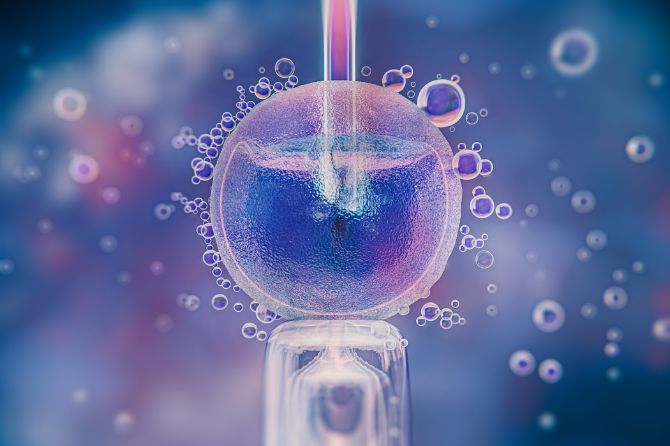
On the same day, the male partner provides a sperm sample, or previously retrieved or frozen sperm is prepared. This is where ICSI differs from standard IVF: an embryologist selects a single healthy sperm and injects it directly into each mature egg under a microscope. The eggs are then kept in carefully controlled conditions.
Step 6: Embryo development
Over the next three to five days, the fertilised eggs are watched closely as they develop into embryos. The embryologist assesses their quality to identify the healthiest ones for transfer.
Step 7: Embryo transfer
A suitable embryo is placed into the uterus using a thin, soft catheter. This is a quick, gentle procedure that usually does not need sedation. Any additional good-quality embryos can be frozen for future attempts.
Step 8: The two-week wait and pregnancy test
About two weeks after the transfer, a blood test confirms whether the treatment has worked. This waiting period can be emotional, and a supportive clinic will guide you through it.
What to expect emotionally and practically
Beyond the medical steps, it helps to know what an ICSI cycle asks of you day to day. The injections are given at home and, while the idea can feel daunting at first, most couples adjust quickly with proper guidance. You will need to attend several monitoring scans, so some flexibility in your schedule during those two weeks is useful. Egg collection and embryo transfer are short procedures, but you should plan for rest on those days. Emotionally, the two-week wait after transfer is often the hardest part, and it is completely normal to feel anxious. Having a supportive partner, realistic expectations, and a clinic you can call with questions makes a real difference. Understanding the ICSI treatment process in Bangalore in advance, step by step, turns an unfamiliar experience into something you can face with confidence and a sense of control.
Care that stays with you
At Kalpa Clinic, couples are guided through each of these steps personally, with clear explanations and honest counselling at every stage. Knowing what each step involves, and having a specialist who stays involved throughout, turns an intimidating process into a manageable, supported journey.
Frequently Asked Questions
-
How long does a full ICSI cycle take?
From the start of stimulation to the pregnancy test, one ICSI cycle usually spans around four to six weeks, including roughly ten to twelve days of injections, egg collection, embryo development, transfer, and a two-week wait.
-
Is egg collection painful?
Egg collection is done under light sedation, so you are comfortable during the procedure. Afterwards you may feel mild cramping or bloating for a day or two, which is normal and usually settles quickly.
-
How many embryos are transferred?
This depends on your age, embryo quality, and individual situation. Your specialist will discuss the safest, most effective number with you, often favouring a single healthy embryo to reduce the risks of twins.
-
What happens to extra embryos?
Good-quality embryos that are not transferred can be frozen for future attempts, which may save you from repeating the full stimulation process later. Your specialist will explain the freezing and storage process, and any related costs, clearly before you decide.




Leave a reply